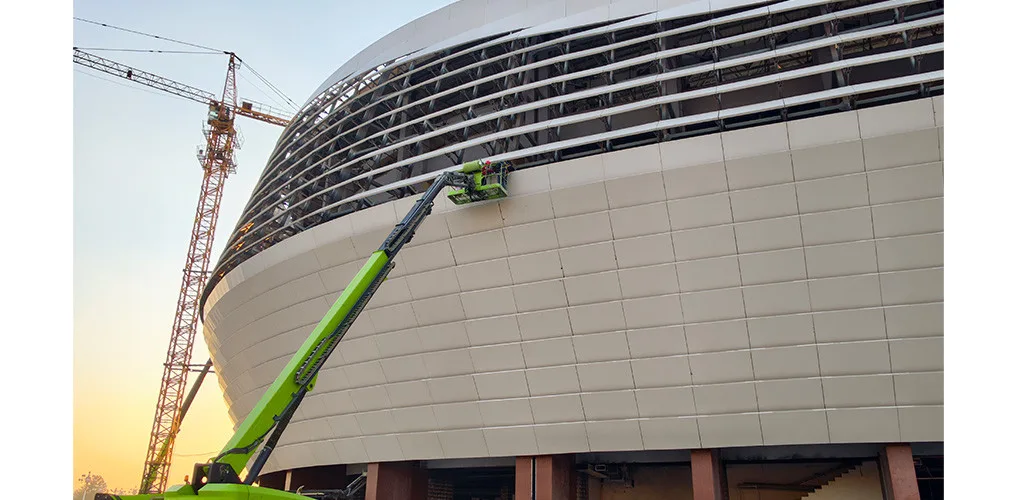
Stone veneer panels let you put the look of solid marble or granite on a wall, a facade, or a fireplace surround without the weight and structural demands of full-bed stone. Whether you are pricing a hotel exterior, detailing a villa fireplace, or comparing stone veneer siding options for a residential project, the deciding factors are the same: material type, substrate, anchorage method, and how precisely the panels are specified. This guide covers all four, plus the questions worth asking any supplier before you issue a purchase order.
What stone veneer panels are
Stone veneer panels are thin, non-structural facing units cut or cast to cover a prepared substrate. Natural stone veneer is sliced from blocks of marble, granite, travertine, limestone, slate, or agate; manufactured stone veneer is a moulded composite of cement, aggregates, and pigments that imitates natural stone. In both cases the stone is a cladding, not a load-bearing element — the wall behind it carries the structural load.
Natural veneer is typically produced in thicknesses from roughly 10 mm to 40 mm, depending on stone type and application. Formats range from square and rectangular tiles to ledgestone strips, large-format slabs, mosaics, medallions, mouldings, and carved pieces such as columns, fireplace surrounds, and sculptures. Because each panel is sawn from real material, colour and veining vary panel to panel — a characteristic designers use deliberately in book-matched and vein-cut layouts, and a variable that must be allowed for in the setting-out drawings.
Marble Supply Co., the export brand of PFM Imp. & Exp. Co., Ltd. in Guangzhou, supplies facade material and related stone scope — including tiles, mosaics, medallions, mouldings, stairs, and fireplace elements; confirm specific veneer formats when enquiring, with partner fabrication in Yunfu City and Shuitou City, as described on the company's website, China.
Natural vs manufactured stone veneer (table)
| Attribute | Natural stone veneer | Manufactured stone veneer |
|---|---|---|
| Material | Solid marble, granite, travertine, limestone, slate, agate | Moulded cement, lightweight aggregate, iron oxide pigments |
| Weight per m² | Heavier; depends on stone density and thickness | Generally lighter for the same face area |
| Appearance | Unique per panel; veining and movement cannot be repeated | Repeatable profiles and colourways; patterns recur across units |
| Weather performance | Excellent for dense, low-absorption stones; porous stones need sealing and detailing | Consistent absorption; colour can fade in strong UV over time |
| Maintenance | Periodic impregnating sealer; repolishing possible on honed/polished faces | Cleaning only; damaged units are replaced, not refinished |
| Cost profile | Higher material cost per m²; value rises with scarcity and finish | Lower upfront material cost; installation cost is comparable |
| Best suited to | Exterior facades, feature walls, fireplaces, high-traffic hospitality interiors | Large-volume residential siding where uniform appearance is acceptable |
Exterior facades and siding
On exteriors, stone veneer siding is a drainage-plane assembly, not a glued-on decoration. The wall needs a weather-resistive barrier, flashing at openings and transitions, a weep screed or weep holes at the base, and a cavity or continuous drainage path so any water that gets behind the stone can exit. Where stone meets grade or a roof line, keep a clearance and terminate the assembly cleanly.
For outdoor stone veneer, choose material by exposure rather than by looks alone. Dense granite, quartzite, and low-absorption limestone and slate handle freeze-thaw cycling, salt spray, and driving rain well. Marble performs excellently in sheltered and interior conditions, but in coastal or freeze-thaw climates it should be specified with an appropriate finish, sealing regime, and installation system — and evaluated against the specific exposure. Surface finish matters too: honed, sandblasted, and split-face surfaces hide weathering better than high polish.
Anchorage for exterior facades is normally either adhered with mortar over a prepared, lath-reinforced substrate, or mechanically fixed with stainless anchors, depending on height, substrate, and code requirements. Marble Supply Co. works with four facade fixing systems — Back Bolt System, Slotted Dry Hanging System, Glued Wall and Flooring System, and Single Point Hanging Wall Cladding System — plus Architectural Waterjet Technology, a cutting and inlay technology.
Built project references include the 2025 New York 15-Story High-Rise Hotel Facade, the 2025 Dubai Luxury Private Villa, the 2024 Qatar Modern Luxury Villa, the 2019 Palestine Private Palace Villa, and the 2016 Hotel Bachaumont Paris.
Fireplaces and interior feature walls
A stone veneer fireplace is one of the most common veneer applications, and one where the details are non-negotiable. The surround must be built from non-combustible materials, clearances to the firebox and flue must follow the appliance manufacturer's instructions and local code, and the substrate behind the stone must be rated for the heat and the weight. Thinner panels suit a modern, flush surround; thicker split-face or stacked formats suit a traditional, deep-relief look.
Interior feature walls allow the widest creative range. Book-matched marble panels create a mirrored vein across a reception wall; vein-cut marble gives a linear, calm rhythm; a marble medallion anchors a foyer floor; mosaic tile and patterns handle curves and columns that large panels cannot. Interior conditions are also more forgiving of polished and honed finishes, since UV and freeze-thaw are not in play.
Two practical points apply to every interior veneer wall. First, confirm the substrate: cement board or masonry over framing is typical, with framing engineered for the dead load of the stone plus adhesive. Second, decide joint treatment early — tight-joint with a minimum reveal, standard mortar joints, or a dry-stack look — because it determines panel tolerance, edge finish, and waste allowance.
Installation methods for stone veneer panels
Installation falls into two broad families.
- Adhered systems. Thin-set or mortar bonds the panel to a prepared substrate, often with metal lath and a scratch coat over framed walls. Simple, economical, and well suited to interior walls, fireplaces, and modest exterior heights.
- Mechanically anchored systems. Stainless steel anchors, kerfs, or pins carry the panel and transfer load back to the structure. Required for tall facades, large-format panels, and seismic or high-wind zones.
Within those families, common techniques include back-bolting (a stainless pin or bolt fixed into the back of the panel), slotted dry hanging (kerfs cut into panel edges engaging a rail or clip), single-point hanging for smaller cladding units, and glued systems where a full-bed adhesive bond is appropriate. Architectural waterjet technology is used to cut curved, patterned, and medallion work that cannot be produced by straight sawing alone.
Whichever method is specified, the sequence is similar: install and inspect the weather barrier, fix lath and scratch coat where required, set out the layout from a control line, install from the bottom up with the specified joints, allow proper cure, then clean and seal. On exteriors, never bridge the drainage cavity with mortar. Veneer installation is a skilled trade; specify an installer with documented experience in the system you have chosen.
What drives veneer cost (factors only)
Stone veneer siding cost and stone veneer fireplace cost are driven by a predictable set of variables rather than a single rate. Expect the following to move the number:
- Material and scarcity. Common granites and limestones sit at the lower end; rare blocks, exotic veining, and book-matchable slabs at the top. Block yield — how much usable slab comes out of a cubic metre — directly affects material cost.
- Thickness and format. Thicker panels and larger formats use more material and require more careful handling, crating, and anchorage.
- Finish and edge work. Polished, honed, brushed, sandblasted, and split-face finishes each carry different processing time. Moulded, bevelled, or chamfered edges add fabrication steps.
- Pattern complexity. Medallions, mosaics, curved work, and waterjet patterns are labour-intensive compared with straight tiles.
- Volume. Fabricators plan around batch sizes; smaller quantities carry proportionally higher setup cost.
- Freight. Stone is heavy. Panel thickness, packaging method, distance, and whether shipping is consolidated all affect landed cost.
- Installation and site conditions. Substrate preparation, scaffold or lift access, height, and the choice of adhered versus anchored systems are frequently the largest single variable.
- Waste factor and lead time. Complex layouts need a higher waste allowance; compressed schedules can force air freight or premium production slots.
Specifying stone veneer panels from a supplier
A complete veneer specification names the stone, the finish, the thickness and tolerance, the format, the edge profile, the anchorage system, the joint width, the sealer, and the acceptable range of colour and veining variation. Ask for a physical sample approved against a signed reference, and state clearly whether variation is to be minimised or celebrated.
When you approach a supplier, bring the drawing set, elevations, quantity by format, and the site location. Useful information to request in return includes: stone name and origin, finish description, nominal thickness with tolerance, weight per square metre, absorption and strength data where relevant, freeze-thaw suitability for exterior use, packing method, and lead time from deposit.
Marble Supply Co. is based in Guangzhou with a showroom roughly 25 minutes from the airport and partner fabrication in Yunfu City and Shuitou City, as described on the company's website. Standard terms: MOQ usually 50 square metres; free samples of marble, granite, and mosaic with freight paid by the buyer and refunded on order; samples ready in 1–3 days; 30% T/T advance with 70% before shipment; shipping from Guangzhou or Shenzhen; replies usually within 24 hours. Certificates available upon request. Tasso White marble is supplied through a Tajikistan quarry partnership, and the company exhibits at Marmomac. North America accounts for 40% of business and the Middle East 27.6%.
Specifying stone veneer panels early — before the substrate is closed up — is what keeps a facade, a fireplace, or a feature wall on programme. Confirm the anchorage system, the drainage detailing, and the sample approval in that order, and most site problems never appear.
Request a Stone Quote and our team will respond with availability, sample timing, and a specification matched to your drawings. You can also reach us at +86 18620157245, [email protected], or on WhatsApp.